workshop 1: anti-racism under fire
Why Inclusion Work Is Being Dismantled — And What You Can Do About It
overview
Across sectors, equity and inclusion efforts are being rolled back. Programs are defunded. Language is policed. Staff are asked to stay “neutral” while the work is actively undermined.
This session is for those doing the work inside public institutions — HR professionals, DEI leads, racialized employees, people managers, and others under pressure to keep things calm in the face of backlash.
We’ll unpack what’s driving this political moment, how the backlash is being framed, and what practical strategies can help you move forward with more clarity — and less burnout.
This is not a compliance training. It’s a space for political clarity and grounded strategy, delivered in plain language and shaped by lived experience.
PARTICIPANTS will leave with
- A breakdown of why anti-racism work is being attacked — and by whom
- Tools to respond to backlash when it shows up as “neutrality,” merit,” or “tone”
- A reflection worksheet to assess risks, allies, and possible next steps in your own setting
- Political grounding to continue the work with purpose — not exhaustion.
this workshop is for
DEI, HR, EDI, and IDEA staff
- Racialized workers and employee resource groups
- Managers, people leads, and decision-makers
- Union equity officers and nonprofit staff
- Anyone carrying equity work inside an institution
format
- 60 minutes total
- 40-minute talk
- 20-minute discussion/Q&A
- Live via Zoom or Teams
- Includes PDF worksheet and follow-up resources
- Optional: short pre-session intake to tailor examples
workshop 2: DEI in the Context of White Nationalist Resurgence
A workshop from outside the university, for those still inside.
overview
This workshop addresses the coordinated rollback of DEI and IDEA efforts across North America and Europe — not as spontaneous backlash, but as the Trojan Horse of the neo–Jim Crow state. We examine how the dismantling of equity frameworks is part of a broader white nationalist resurgence; how the unseriousness of liberal language around “diversity” has been repurposed as proof of the failure of non-racism; and how this has set the stage for state-sanctioned racial dominance repackaged as neutrality.
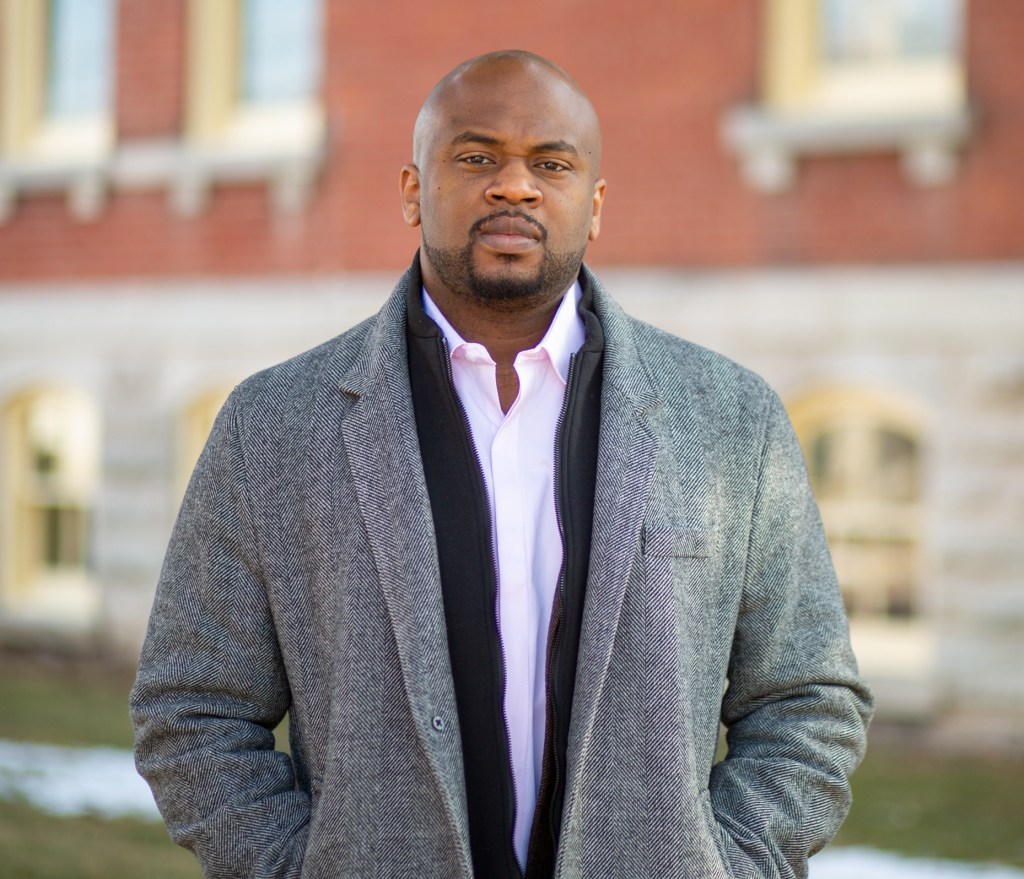
Rather than offering comfort or strategies for reform, this session provides political clarity. It is part lecture, part facilitated strategy session — built for those navigating front-line institutional contradiction. The facilitator, Yannick Giovanni Marshall, brings not only academic expertise in anti-colonial theory, American Studies, and African Studies, but the lived experience of political exile. In April, he left his post at CalArts — not for another job, but in protest — and has since redirected his work beyond the classroom toward anti-apartheid movements in the public square.
We explore how DEI is being reabsorbed into systems of surveillance and symbolic compliance, and how workers, faculty, students, decision-makers, and all those opposing the return of apartheid logic can clarify their role in relation to this emerging order.
key themes
- Anti-DEI and anti-wokeness as white nationalist strategy — not mere backlash
- The institutional neutralization of radical Black and Indigenous critique
- Responding to institutional betrayal
- Rejecting half-measures and liberal amelioration in the pursuit of liberation
- Revisiting the intellectual heritage of anticolonialist and anti-apartheid strategies for pushback against white supremacy past and present
format
- Virtual delivery (Zoom, Teams, or platform of choice)
- 75-minute session: 25-minute talk + 50-minute discussion/Q&A
- Optional follow-up session or multi-part series upon request
this workshop is for
- DEI/IDEA offices
- University faculty and administrators
- Student organizations
most recent engagement
Scheduled with Alberta’s Family and Community Support Services (FCSS) IDEA Working Group — a cross-provincial cohort of coordinators, managers, and directors advancing inclusion, diversity, equity, and accessibility across public institutions.
Now booking Fall 2025–Spring 2026.
After receiving individual interest, I’ve decided to open up a public live session of my DEI workshop for those not affiliated with an institution. This is a one-time offering, with sliding-scale access to make it more widely available. Send me a message re: sliding scale prices. Click below for live session offering.
About the Facilitator
This workshop is rooted in lived experience, intellectual defiance, and political exile.
Yannick Giovanni Marshall is a scholar and public thinker trained in anti-colonial theory, African-American Studies, and African Studies. He holds a PhD from Columbia University (MESAAS) and has taught in Africana Studies, African American Studies, and most recently, Contemporary Black Thought at CalArts.
His doctoral dissertation examined the apartheid regime in colonial Nairobi as a blueprint for what he terms “the bleaching carceral” — a racial political order that launders domination through legality. That framework continues to inform his analysis of diversity discourse, colonial reformism, lynch-law, and state-sanctioned violence.
His first published essay — a widely read piece for Blavity — challenged the use of the N-word by a white professor under the pretense of academic interest. It marked an early public defense of Black students against institutional indulgence of anti-Blackness.
Marshall’s course offerings — Black Lives Matter, Deconstructing the Police, Radical Black Freedom and Its Discontents, The African Apartheid City, and others — were built not merely to interrogate power, but to confront it. He has written over 20 essays for Al Jazeera on race and radical politics and has been featured in numerous interviews, podcasts, and panel talks. His forthcoming books, The End of Supplication (Bloomsbury, 2025) and Hostiles (in progress), explore the containment of Black dissent and the political logic of lynch mob enforcement.
He has been targeted, censored, and pushed out — suspended in high school for speaking about European imperialism in Africa, surveilled as an undergraduate, threatened for his writings, and in 2025, forced to abandon a stable life in Los Angeles in protest of the state repression of Black Studies and oppositional thought.
This is not routine professional development. It is not a box to check.
It is a call to clarity — for those still inside, delivered from outside.
 Yannick Giovanni Marshall